How clear cybersecurity insight protects operations and strengthens leadership confidence.
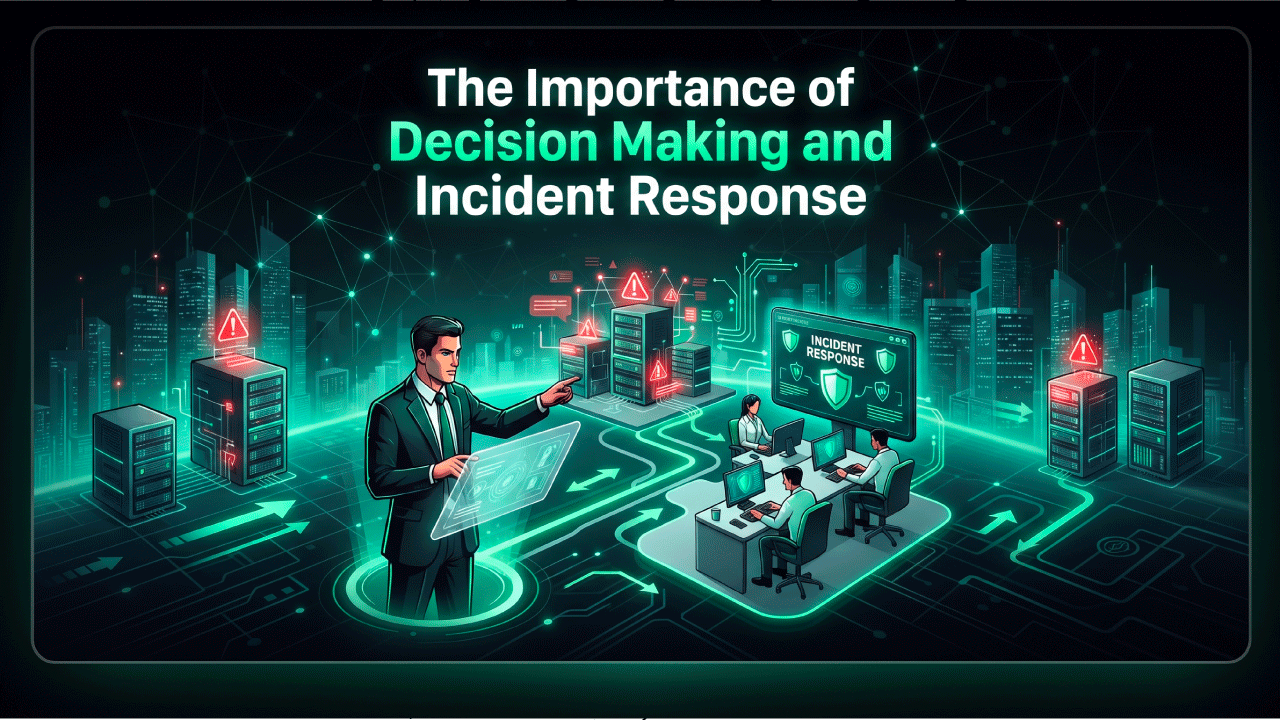
In a mature Security Operations Center (SOC), the value of monitoring is measured by the decisions it enables under pressure. A cyber incident becomes a business crisis when leaders cannot quickly determine what happened, which operations are at risk, and who has authority to act. Detection must lead to validated containment. Organizations reduce disruption when security teams translate technical evidence into clear business impact and act before the attacker expands control.
Three Questions Every Leadership Team Must Answer
The strength of an organization’s cyber resilience can be tested through three direct questions:
- If we were breached this morning, when would we know?
- Which business functions would be disrupted, and for how long?
- Who is authorized to make critical decisions during an incident?
If the answers depend on assumptions, personal availability, or information scattered across different tools, the organization carries more risk than its technology investment may suggest. A mature response capability gives leaders defined notification thresholds, a current view of affected services, and a decision structure that remains effective under pressure.
Measuring Detection and Response Speed
Mean Time to Detect, or MTTD, measures the average time from the first observable sign of suspicious activity to its identification. Mean Time to Respond, or MTTR, measures how quickly the organization acts after validating an incident. Because MTTR may also refer to remediation or recovery, every report must define its starting and ending points. Leaders should review both metrics alongside time to containment, service downtime, and affected business functions so that averages do not hide serious delays.
Cybersecurity Information Must Support Business Decisions
Security platforms generate alerts, event records, indicators, and technical findings. A CEO or board member does not need every technical detail. Leadership needs to know whether the incident is contained, what business services may be affected, what decisions are required, and what the likely operational and financial consequences are.
For a CFO, the immediate concern may be exposure to fraud, downtime, contractual penalties, recovery costs, or delayed revenue. For a CEO, the priority may be customer trust, regulatory obligations, and continuity of critical services. Board members need assurance that management understands the risk, has assigned authority, and is acting within an approved response framework.
This translation from cyber evidence to business impact should happen throughout the incident. Early assessments may be incomplete, so leaders must receive clearly stated facts, assumptions, confidence levels, and next decision points. This approach supports decisive action without presenting uncertainty as certainty.
Why Speed and Judgment Matter Together
The first minutes of an incident often determine whether the organization contains a limited event or manages a wider operational disruption. Delays can allow attackers to move between systems, steal more data, interrupt additional services, or exploit active user sessions. Yet speed without judgment can also cause harm if teams disable essential systems without understanding business dependencies.
Effective response therefore depends on both rapid execution and informed authority. Technical teams must know which accounts, devices, network paths, or applications they can isolate immediately. Business leaders must know when to activate continuity plans, involve legal or regulatory stakeholders, communicate with customers, or accept a short-term operational impact to prevent a larger loss.
Use Case One
- Lebanon Private Sector
This anonymized use case is based on a real incident handled by our team. The organization had security visibility on its domain controller, but coverage across the wider environment was limited. We detected a compromised administrator account attempting to execute ransomware from the domain controller, with the apparent objective of distributing the malware across the company network.
The incident required an immediate decision. After validating the malicious activity, the compromised privileged account was disabled without delay. This containment action interrupted the attacker before the ransomware could be deployed throughout the domain. The investigation then reconstructed the available sequence of events and identified a web server as the earliest compromised node from which the attacker had progressed toward the domain environment.
Fast MTTD and MTTR materially changed the outcome. Early detection shortened the attacker’s operating window, while immediate containment prevented a potentially company-wide disruption. However, the case also exposes the risk of partial visibility. A successful response in one monitored system does not justify leaving other servers or endpoints unmonitored. Broader endpoint, identity, network, and centralized log coverage is necessary to detect the full attack path and reduce uncertainty during containment.
Know more about our Clients
Use Case Two
- Saudi Arabia Financial Services
This illustrative scenario reflects a common risk in distributed financial-services environments. An attacker obtains valid VPN credentials and connects through an unmanaged endpoint that does not meet the organization’s security baseline. Because the authentication appears legitimate, the connection may escape attention unless identity, VPN, endpoint, and network activity are correlated.
The SOC identifies unusual access conditions and activity inconsistent with the user’s normal behavior. The response team revokes the active VPN session, disables or resets the compromised account, blocks the relevant indicators, and prevents the unmanaged device from reconnecting. Analysts then review the user’s activity to determine which systems and data were accessed and whether lateral movement occurred.
For leadership, the decision is not limited to closing a VPN session. The organization must determine whether operations can continue safely, whether sensitive information was exposed, and whether wider containment or notification is required. Strong multifactor authentication, conditional access, device-compliance enforcement, and continuous monitoring reduce the likelihood that stolen credentials can become trusted network access.
Read some of our Clients’ Studies
How TEKNOLOGIIA Supports Incident Decisions
TEKNOLOGIIA’s trusted experts monitor security activity across endpoints, identities, email, cloud services, applications, and network infrastructure. When suspicious activity appears, the team validates the signal, investigates its scope, assesses the likely business impact, and coordinates the required containment and recovery actions.
Schedule your Free Consultancy
DIR: Decision Intelligence and Response
TEKNOLOGIIA’s DIR platform brings security signals, investigation context, and response workflows into one coordinated operating layer. It enriches alerts, generates concise incident and root-cause context, and supports controlled actions such as revoking sessions, resetting compromised accounts, or isolating affected endpoints. High-impact actions remain under analyst or authorized business approval. By reducing manual handoffs and translating validated technical evidence into business impact, DIR helps shorten MTTD and MTTR while preserving human judgment, governance, and accountability.
The objective is to provide decision-makers with information they can use. Executive updates should explain what is known, which services or data may be affected, what has already been contained, what business decisions remain open, and when the next validated update will be available. Behind those updates, analysts preserve evidence, track actions, coordinate with technical owners, and confirm that restored services remain stable.
Prepared Response Reduces Business Disruption
Clear procedures remove avoidable hesitation. An effective incident response plan identifies escalation thresholds, decision owners, communication channels, technical containment authority, evidence requirements, and recovery priorities. It also defines alternates when a primary decision-maker is unavailable.
Regular exercises are equally important. A plan that has never been tested may fail when teams discover that contact lists are outdated, system dependencies are undocumented, or approval authority is unclear. Short executive simulations help leaders practice decisions about service isolation, customer communication, regulatory notification, and recovery sequencing before those decisions carry real consequences.
Leadership Confidence Comes From Readiness
Leadership cannot eliminate every cyber incident, but it can control how prepared the organization is to detect, assess, and respond. The goal is to shorten the period between the first sign of trouble and a sound business decision.
Organizations that combine continuous monitoring, experienced assessment, defined authority, and tested response procedures are better positioned to contain incidents and protect critical operations. They also give executives greater peace of mind because responsibility is clear, decisions are supported by evidence, and the response is managed with the business impact in view.
Related Article about Decision Intelligence
FAQs:
To help you better understand this topic and how it applies to your organization, we have answered some of the most frequently asked questions below:
- What is cybersecurity decision intelligence? Cybersecurity decision intelligence transforms technical alerts and security data into clear, prioritized actions. It helps decision-makers understand what happened, which business functions are affected, and how to respond.
- Why is decision-making important during a cyber incident? Fast, informed decisions can limit operational disruption, financial losses, data exposure, and reputational damage. Without predefined responsibilities and escalation paths, organizations may lose critical time during an incident.
- What should business leaders know during a cyber incident? Leaders need clear answers to three questions: when the incident was detected, which business operations could be affected, and who has the authority to make and execute response decisions.
- How can an organization improve its incident-response decisions? Organizations can improve by defining decision authority, assigning responsibilities, testing response plans, establishing escalation procedures, and giving leaders access to relevant business-focused security intelligence.
- How does TEKNOLOGIIA support decision-making and incident response? TEKNOLOGIIA helps organizations connect cybersecurity monitoring with structured response procedures, prioritized intelligence, defined escalation paths, and clear accountability throughout the incident lifecycle.
Related: From Detection to Decisions: How Decision Intelligence Elevates Identity Threat Detection and Response (ITDR) Security and Managed SOC Lebanon: The 24/7 Cyber Defense Your Business Needs.